

📖 About This Summary
Summary based on the discussion “This Legendary Investor Called the Oil Rally – Now He’s Betting on This” by Miles Franklin Media. Edited and annotated by Time Health Capital.
The conversation features natural resource investor Rick Rule and examines developments in energy markets, commodity investing, gold, uranium, and the broader global economy.
More broadly, the discussion explores a theme becoming increasingly relevant to investors: the growing value of resilience. As supply chains, energy systems, and geopolitical relationships become more complex, governments and businesses are reassessing how they secure critical resources and manage long-term risk.
For years, markets rewarded efficiency. Increasingly, they may begin rewarding resilience.
🌍 The World Was Built for Efficiency
For much of the last three decades, global markets operated under a relatively simple assumption: efficiency was the primary objective.
Supply chains stretched across continents. Manufacturing migrated toward lower-cost regions. Energy could be sourced wherever it was cheapest. Businesses optimized operations around speed, scale, and cost reduction.
This framework created significant benefits. Consumers enjoyed lower prices, corporations improved margins, and investors benefited from an increasingly interconnected global economy.
However, recent events have exposed some of the vulnerabilities embedded within that model.
Pandemic disruptions, geopolitical tensions, trade restrictions, and energy shortages have demonstrated that systems optimized for efficiency are not always optimized for resilience.
As a result, policymakers and corporate leaders are beginning to reassess how they think about critical resources, supply chains, and strategic capacity.

⚖️ Energy Security Is Becoming a Strategic Priority
Historically, many countries focused primarily on securing energy at the lowest possible cost.
Today, reliability of supply is becoming just as important.
Nations that depend heavily on imported energy are increasingly evaluating their vulnerabilities. Businesses are doing the same as they assess manufacturing capacity, transportation networks, and long-term operating costs.
The concern is not simply about commodity price volatility.
It is about access.
Reliable access to energy influences manufacturing output, transportation systems, food production, national security, and economic stability. When access becomes uncertain, governments often become more willing to pay for resilience.
This shift has implications that extend far beyond oil markets.
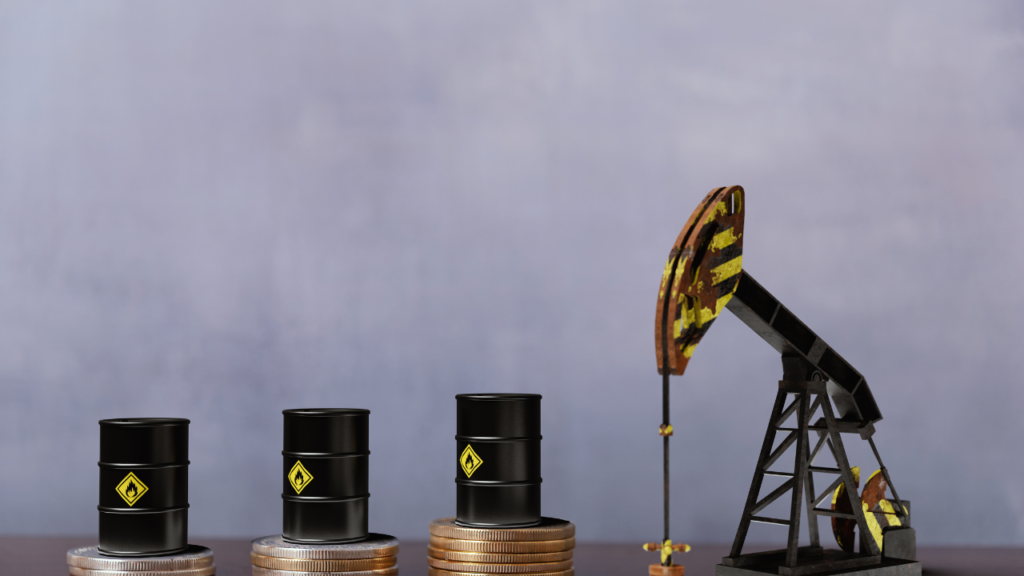
🛢️ Oil Markets Reflect More Than Short-Term Headlines
The discussion highlights an important distinction that often gets lost during periods of market volatility.
Oil prices frequently react to headlines, conflicts, and geopolitical events. Yet long-term commodity cycles are often driven by factors that develop over many years.
One of those factors is investment.
Energy production requires ongoing capital investment to maintain existing supply and develop future production. When investment levels fall below what is needed to sustain long-term output, supply constraints can emerge years later.
The discussion argues that this underinvestment has been building for some time and that recent geopolitical tensions may have accelerated a trend that was already underway.
Whether oil prices remain elevated in the near term is uncertain. The broader question is whether years of underinvestment ultimately create a tighter supply environment than markets currently expect.
☢️ Uranium and Nuclear Energy Are Returning to the Conversation
One of the most notable themes in the discussion is the renewed interest in nuclear energy.
For many years, nuclear power struggled with political opposition, regulatory challenges, and negative public perception. More recently, however, the conversation has begun to change.
Energy security concerns, growing electricity demand, and the need for reliable baseload power have pushed nuclear energy back into policy discussions around the world.
Unlike many energy sources, uranium offers a unique combination of energy density and long-term storage capability. Countries with limited domestic energy resources may increasingly view nuclear power as an important component of future energy strategies.
The discussion suggests that this shift may represent a structural trend rather than a temporary market cycle.
🥇 Gold's Role Extends Beyond Inflation
The conversation also explores the continued accumulation of gold by central banks around the world.
While gold is often discussed as an inflation hedge, central-bank behavior suggests a broader role.
For many institutions, gold serves as a reserve asset that exists outside the liabilities of any single government or financial system.
Recent purchases by central banks, combined with efforts by some countries to repatriate gold reserves, reflect a growing emphasis on flexibility and diversification.
Whether one agrees with the motivations or not, these actions provide insight into how sovereign institutions are thinking about long-term financial risk.
💡 Markets Often Reward Preparation, Not Prediction
Another valuable takeaway from the discussion is the distinction between predicting specific events and preparing for multiple outcomes.
Investors frequently focus on forecasting the next recession, the next market correction, or the next geopolitical event.
The challenge is that these events rarely arrive on schedule.
Rather than attempting to predict every outcome, many successful investors focus on building resilience into their portfolios. This may involve maintaining liquidity, diversifying risk exposures, and ensuring that portfolios can withstand a range of economic environments.
The discussion emphasizes that flexibility can be just as important as conviction.
💡 Our Commentary / What It Means for Us
One of the more interesting developments taking place today is the growing recognition that resilience has value.
For years, markets rewarded efficiency above all else. Businesses optimized supply chains, governments relied on global trade networks, and investors often assumed that critical resources would remain readily available when needed.
Recent events have challenged those assumptions.
The conversation around oil, uranium, and gold may appear to involve separate asset classes, but they are connected by a common theme: security.
Energy security. Resource security. Financial security.
When uncertainty increases, individuals, institutions, and governments often become more willing to pay for resilience.
That does not mean globalization is ending or that resource shortages are inevitable. It does suggest, however, that markets may place a higher value on reliability than they did during the previous era of abundant capital and stable supply chains.
For investors, the broader lesson is not necessarily about any single commodity. It is about understanding how changing priorities influence capital allocation. When governments and businesses begin spending more to secure critical resources, the effects can ripple through entire industries and investment sectors.
The most important trends are often visible long before they become obvious in market prices.
❓ Questions & Implications for Readers
- How might energy security influence investment decisions over the next decade?
- What are the long-term consequences of underinvestment in critical industries?
- How should investors think about resilience versus efficiency in portfolio construction?
- Why are governments revisiting nuclear energy after years of limited enthusiasm?
- What can central-bank gold purchases tell us about institutional thinking?
- Which industries stand to benefit if resource security becomes a larger global priority?
🎥 Prefer to Watch the Full Discussion?
This Legendary Investor Called the Oil Rally – Now He’s Betting on This
💡 Ready to explore alternative asset strategies? Talk directly with Dr. Ozoude at Time Health Capital.
Schedule a Call with Dr. Ozoude



Disclaimer: This summary is based on the video “This Legendary Investor Called the Oil Rally – Now He’s Betting on This” by Miles Franklin Media. All rights to the original content belong to the creator. Time Health Capital provides this article for educational and informational purposes only — not as investment advice.